

US investment adds to Saudi steel growth mix
- 30 May 2025

This month’s expansion of US-Saudi Arabia investment flows will “definitely drive the next phase of evolution” of the Kingdom’s economy, says one of the organisations closely mapping its construction sector and associated material, labour and capital demands.
Already in the midst of “one of the most ambitious building agendas globally”, Saudi Arabia can expect further technology, energy and material supply infrastructure stimuli after the US president Donald Trump’s visit, according to Versatile International CEO Marco Fahd. Versatile has just put out a research paper called, “Construction in 2025: Paving the Way to 2030 and Beyond”, highlighting the trillion-dollar development pipeline driving Saudi economic expansion.
In the queue are projects such as the NEOM mega venture, Diriyah Gate, Jeddah Central and other 2034 FIFA World Cup infrastructure, and the King Salman International Airport.
“With Saudi Arabia accounting for nearly 40% of MENA’s [Middle East and North Africa] project value and the recent $600 billion [US] investment deal, our research validates what we’re seeing: the kingdom has become the regional benchmark,” Fahd said.
“This isn’t just about construction growth it’s about redefining what's possible at unprecedented scale and speed.”
New Saudi Arabia-US funded ventures and the Kingdom’s impressive 2030 economic and social goals, and project pipeline, will be front and centre at the upcoming Saudi International Iron & Steel Conference in Riyadh in October.
The third edition of the conference will zero in on the immense steel demands of the country’s giant infrastructure undertakings, fast-paced urban development and industrial investment programs.
Earlier this year at the Future Minerals Forum in Riyadh, MENA region steel major Saudi Iron & Steel Company (HADEED) outlined plans to double its steel production to circa-10 million tonnes per annum and build a bigger international profile through acquisitions with investments totalling up to US$6 billion by 2030.
All up, about $12 billion could be invested in iron and steel projects to help meet significant forecast growth in domestic demand by that time.
“The steel industry in Saudi Arabia is poised for substantial growth, supported by robust government initiatives and strategic investments in infrastructure and construction projects,” a 2024 report by Dubai-based Glasgow Research & Consulting said.
“While the market faces challenges such as overcapacity in certain segments the overall demand outlook is positive. The industry's growth trajectory aligns with the broader economic goals of Vision 2030, positioning Saudi Arabia as a key player in the global steel market.”
A report out this month on the $5.4 billion Saudi Arabia rebar steel sector suggested this market could also more than double in size in the next five years.
“The Saudi Arabia rebar steel market is primed for growth due to increased urbanisation, population rise and significant government investment in infrastructure as part of Vision 2030,” the report said.
“The government's Vision 2030 initiative further supports urban transformation through affordable housing programs and infrastructure modernisation. With Saudi Arabia's population projected to grow from 35 million in 2024 to over 40 million by 2030 and urbanisation rates expected to reach 90%, cities such as Riyadh, Jeddah and Dammam are witnessing an uptick in construction activity, driving sustained demand for rebar steel.”
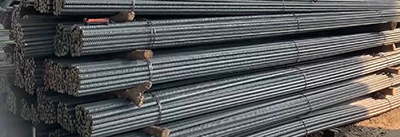
The report also indicates the adoption of sustainable practices and modern manufacturing technologies is reshaping steel production processes.
“A key trend in the Saudi Arabia rebar steel market is the integration of advanced technologies to enhance manufacturing efficiency and product quality. Automation and robotics are increasingly being utilised to streamline tasks such as cutting, bending and welding rebar, ensuring precision and reducing labour-related inefficiencies,” it said.
“The adoption of Industry 4.0 technologies, including AI and IoT, is enabling real-time monitoring, predictive maintenance and optimised energy usage across production lines.
“Moreover, the focus on sustainability is prompting steel manufacturers to adopt cleaner, resource-efficient processes that reduce emissions and waste, aligning with environmental regulations and green building standards.”
The US-based Institute for Energy Economics and Financial Analysis (IEEFA) said in March this year recent developments underlined MENA’s potential to lead the world’s transition to green iron and steel. It said Libya had announced plans to become a supplier of direct reduced iron (DRI) in the Mediterranean basin and beyond, following on from Brazil iron ore major Vale’s moves to expand iron ore concentrate and agglomerate capacity in the MENA region via its mega hub concept.
IEEFA energy finance analyst, global steel, Soroush Basirat said MENA had one of the world’s fastest growing steel industries and was the “leading hub for gas-based production of DRI”.
“Steelmaking from DRI using electric arc furnaces has lower emissions than traditional coal-based processes,” he said. “It also offers the flexibility to transition from fossil gas to green hydrogen, enabling even greater emissions cuts.”
MENA’s DRI capacity was growing, said IEEFA, rising from 11% of global output in 2021 to 45% only two years later.
“While other regions see access to high-grade feedstocks as a barrier to decarbonising via DRI-EAF, MENA enjoys reliable availability of iron ore concentrate and pellets,” the institute said. “This availability will grow further as a result of Vale’s expansion plans.
“In addition, MENA is one of the world’s fastest-growing renewable energy markets and holds records for some of the cheapest renewable energy, supported by its unique solar and wind potential. As a result, the region is emerging as a leading green hydrogen hub, with deployment of green hydrogen in steelmaking already underway.”
Vale’s Rogerio Nogueira, executive vice president of commercial and new business, said in Riyadh earlier this year the company’s plan to establish a 12 million tonnes per annum cold briquetted iron facility at Ras Al-Khair Industrial City represented “our first step towards reshaping the future of the steel industry in the Middle East”.
“The Khair Mega Hub will serve as a model for integrating advanced technologies with sustainable practices, driving not only environmental impact but also economic value,” he said. Along with planned iron-making facilities in Oman and the UAE, the hub would act as a “regional enabler of green steel, supplying high-grade iron ore and fostering collaboration between Vale, steel producers and other industrial players”.
A report published this month by Germany’s SMS group said a global transition towards green steel required massive investment in new infrastructure. It said green electricity generation, hydrogen production and storage system investments often exceeded the market value of traditional steel makers, “as upstream energy-related investments have an order of magnitude that is greater than that of the steel plant itself”.
“When it comes to future energy supply chain investments it is clear that energy companies and green investment funds will be in the driver’s seat, and not steel producers,” report authors Peter Kinzel, head of green ironmaking at SMS, and Ji Jihong, group process engineer green ironmaking, said.
“The former have much better credit ratings, giving them access to capital and at much lower interest rates than for steelmakers. This difference in financial leveraging power is only further increased when interest rates remain high. The resulting high treasury bond yields make lenders even more wary of non-investment grade bonds from steelmakers.
“Additionally, the energy sector offers much more stable returns and free cash flow due to the nature of their business model and generally present bigger market capitalisation, allowing them easier access to equity for large investments on top of higher borrowing capacity at better rates.
“In short, decarbonisation projects at this scale require the financial resources of players outside the steel industry. It is therefore up to the energy sector and possibly also governments to set the tone on whichever national and global green energy strategy is the most beneficial to them, whilst steelmakers will most likely have to play the hand they are dealt.”


